
In Paris, every stone tells a story. A capital shaped by over 2,000 years of history, it offers a fascinating architectural journey through the centuries. From the flamboyant Gothic of medieval churches to the clean lines of contemporary architecture, the city is a veritable open-air museum. Let’s take a guided tour of the architecture of Paris, to discover a capital in constant evolution.
The Middle Ages: the city’s Gothic soul
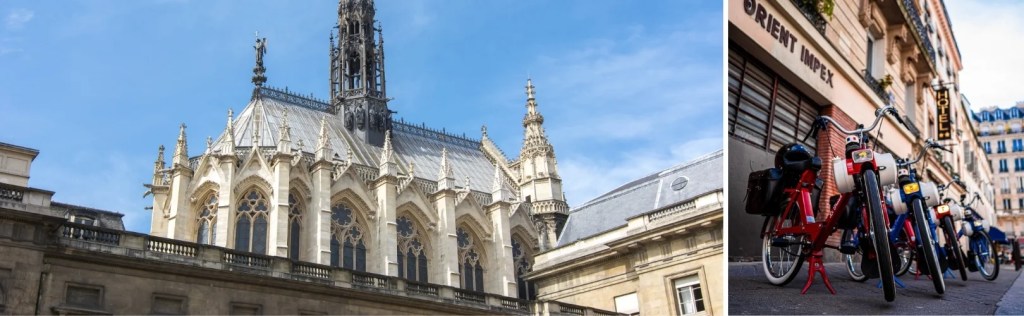
Start your exploration on the Île de la Cité, the birthplace of Paris, where the medieval imprint still remains. The majestic Notre-Dame de Paris cathedral, despite the aftermath of a fire, remains a masterpiece of the Gothic style. With its flying buttresses, gargoyles and colorful stained-glass windows, Notre-Dame is a jewel of the medieval period. A little further on, the Sainte-Chapelle impresses with the finesse of its architecture and the luminous intensity of its stained-glass windows. These medieval gems bear witness to a time when sacred art was as much about uplifting souls as it was about building walls.
The Renaissance and the Grand Siècle: classical elegance
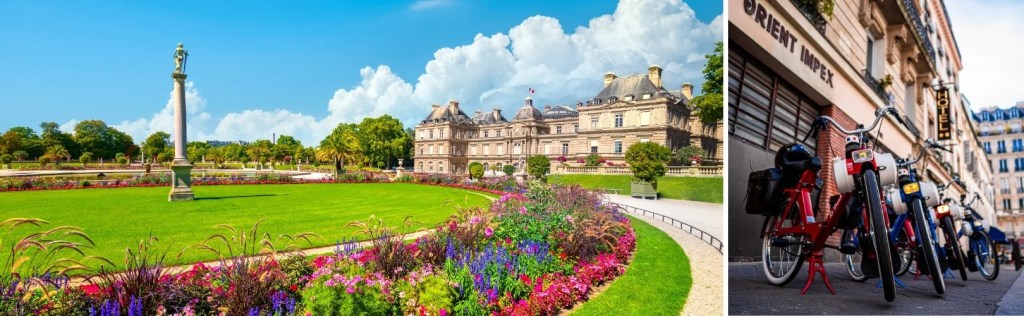
Strolling through the Marais or near the Louvre, you enter the world of 17th-century refinement. Mansion houses with their orderly facades and discreet courtyards tell the story of the grandeur of an urban nobility. The Palais du Luxembourg and the Hôtel de Sully illustrate the harmony of the classical era. During a guided tour of Paris, a guide will reveal the architectural codes of this period, influenced by Antiquity and the ideal of symmetry.
The 19th century: Paris reinvents itself

It was in the 19th century that Paris took on its current face. Baron Haussmann transformed the city with his wide boulevards, buildings with spindly balconies and spectacular perspectives. The Garnier Opera is a symbol of this: theatrical, monumental, eclectic. At the same time, the Eiffel Tower appeared on the scene, the embodiment of triumphant modernity. A guided tour of the Eiffel Tower reveals the audacity of its metal structure, defying the conventions of the time.
Art Nouveau and Art Deco: decorative styles

The turn of the 20th century brought new forms, inspired by nature or geometry. The Parisian metro, with its wrought-iron bells designed by Hector Guimard, gave the city an Art Nouveau touch. In the 16th arrondissement, Art Deco architecture is elegantly displayed in residential buildings with clean lines and materials such as marble and glass.
Contemporary Paris: between audacity and integration

Today, Paris continues to evolve, between respect for heritage and modern creations. The Centre Pompidou, with its visible coloured pipes, was a shock to many before it was adopted. The Fondation Louis Vuitton, designed by Frank Gehry, seems to sail over the Bois de Boulogne like a glass vessel. Finally, the BnF, the Philharmonie and the towers of the La Défense district illustrate this ongoing dialogue between history and innovation.
Conclusion
To explore Paris through its architecture is to read the city like a living book. Each era has left its mark, and each building is a key to understanding the society that gave birth to it. To fully appreciate this richness, nothing beats a passionate guide who is able to place each monument in its proper context.
Book your guided tour now at https://lefrenchway.com/en and enjoy an unforgettable experience in Paris.